by CWEARC | Jun 1, 2012
Rice mill and cooperative is the most requested project in the remote areas in the Cordillera region where rice is the primary crop. This is because shortage is often experienced given the situation that rice farms are limited to about 0.2 hectares per family in the Cordillera interiors. Most of the communities produce rice once a year thus, it is only able to produce the rice needs of the family from 2-4 months.
There is rice shortage but at the same time there is a need for a rice mill. Farmers’ organizations, especially women see the rice mill as a tool to unburden them from the backbreaking labor of pounding rice. This is particularly true among Kalinga women who by culture are the ones in charge of the work.
There had been a lot of rice mill projects assisted by service non-government organizations belonging to the consortium of the Center for Development Programs in the Cordillera region (CDPC) where the Cordillera Women’s Education Action Research Center Inc (CWEARC) is included. Some of the rice mill and cooperatives prospered which is primarily attributed to the unity and perseverance of women and peoples’ organizations who led these projects. Some of these projects however failed.
Learning the hard way from a rice cooperative
Earlier in 1996, a rice cooperative was run by the local women’s organization in Mabaca with financial assistance from Cordillera Women’s Education Resource Center (CWERC). The chapter of Innabuyog-Kalinga Apayao facilitated the partnership. Nine cavans of rice then was provided as the initial revolving capital which families of the women’s organization borrowed in times of critical rice supply. Rice borrowed is returned usually during harvest time with a small interest to increase the volume of rice being revolved among members who are in dire need of rice.
The failure however of the rice cooperative as shared by the women’s organization is attributed to the low management capacity of and skills in managing a socioeconomic project. In the short course of practice, the rice cooperative was privatized by some officers, transparency was not developed and collective management was not facilitated.
The organization also acknowledged that there were no committees created to oversee the cooperative’s operation. There were no systems enforced to ensure that the cooperative is operating smoothly. The rice loans turned out as dole-out because there was no clear policy of payment and collection of payments. Moreover, loans were not well recorded, use of loan payments was not accounted and an audit was never conducted.
These explain an outstanding point in their assessment that the rice cooperative did not deliver its function of contributing to advance a community livelihood project.
Members of the women’s organizations lamented strained relationship within the organization due to how the project turned out. They have truly learned the hard way. Although disheartened, they have been looking forward to revive the cooperative. Given the chance, they said, they already know the needs in order to manage a project well.
Bringing their lessons to greater heights
Having been granted the second chance, their next project turned out to be one of the success stories in the socio-economic work in the region. The project is a micro-hydro which powered a rice mill of the rice cooperative, energized all houses of 36 households and powered a community blacksmith of sitio Bayowong, Barangay Mabaca of the Municipality of Balbalan in Kalinga province. It started with the desire of the Mabaca Farmers’ Alluyon (MFA) to relieve the women in the community from the hard work of pounding rice.
On April 2001, the project took off with the assistance from Montañosa Research and Development Center (MRDC) and other partner non government organizations (NGO) in the region. The operation of the rice mill cum rice cooperative and community blacksmith began in 2003.
Mabaca Farmers’ Alluyon
All the farmers, including women in the village are members of this organization. This was formed because of the farmers’ desire to work together in order to be able to bring development in their community. They are one in the belief that unity will enable them to survive the difficulties that severe poverty brings. They then sought the support of NGOs for the aforementioned socio-economic project and it was granted by MRDC and other partner institutions.
According to their narration during the socio-economic workshop on March this year, working for the project did not end when it was granted. It was only the beginning of hard work and struggle for the members of MFA to solve the encountered problems in putting the rice mill up. It was an achievement in progress. The process itself was a learning journey for them starting from the planning until rice cooperative’s full operation.
Project cost
The all over cost of the project is P1.2 million (US$28,571.50) including the counterpart of the peoples’ organization (PO). Half of the cost is loan and the other half is grant. Also part of MFA’s counterpart to the project is the manual hauling of purchased materials, widening and clearing of irrigation canal, producing locally hand sawed lumber and voluntary labor until its full operation.
A learning process
As a farmers’ organization that is not adept in the management and operation of such livelihood project, it was a journey of learning. First was setting up of the micro-hydro project as a source of energy for the rice mill, lighting of houses and eventually set up a blacksmith that is also powered by the hydro.
Before the project started, the members of MFA went to a learning trip in barangay Ngibat in the municipality of Tinglayan, also in Kalinga province. It is in this barangay where an existing rice mill cooperative which is providing them electricity used for light and in the blacksmith is located. This is an example of a successful socio-economic project which continues to operate as of press time. Further, this micro hydro project is one of the pioneering success stories of MRDC in developing appropriate technology among indigenous peasant communities in the Cordillera. When electricity from the Kalinga Electric Cooperative (KAELCO) finally reached the said community, most of the people decided not to connect with it. Their reason was, the electricity produced by the rice mill is enough for their energy needs.
MFA learned a lot from Ngibat Rice Mill Cooperative. Participants of the learning trip told that the success story of Ngibat gave them strength to continue the same project in their own community. MRDC and other partner NGOs helped MFA with the basic skills in operating the micro-hydro project, the rice mill and cooperative and the community blacksmith. During the earlier months in operating the technology, the officers and the whole of MFA were guided by MRDC in instilling the right orientation in managing the technology and the use of the technology in galvanizing community unity.
By 2003, all houses consisting of 36 households enjoyed lighting until 10 o’clock at night. This allowed children to study their lessons and enabled folks to do their weaving of baskets, mats and other handicrafts in the night. Light is opened at 4o’clock in the morning allowing the peasants to do the home chores and preparation for their school-going children while they equally prepare their needs for their farm work. When there is a community occasion, the energy supply is available for overnight.
The rice mill began its operation in 2003. The rice mill charges P7.00 (US$0.16) per can (the size of a 17- kilogram cooking oil) or 2 chupas (large size of a sardine can) of milled rice for every can of unmilled rice.
Like that of Tanglag, members of the MFA were taught on the principles of collective ownership thus avoiding the overruling of self – interest among members which will prevent the occurrence of petty corruption. The association then created guidelines of the rice mill cooperative. They formed committees with specific tasks. It was stressed in the guideline that there shall be no credit and a member should not be absent during his/her shift in manning the operation unless there is a valid reason.
Present status of the project
As of the moment, the project is smoothly moving forward. According to the MFA, they applied all the lessons they have learned during the earlier months of operation. The beneficiaries have also expanded. It is now serving not only the residents of Bayowong but also nearby villages who are buying palay in their community. Moreover, it is now generating electricity that they are using as a source of light and used in the blacksmith.
The project did not only relieve the women from pounding rice but it has benefited the whole community. According to them, there is already no need for them to buy farm tools in the town center because people in the community can already forge bolos, knives and other farm tools.
Challenges met
The leaders of the MFA said, the biggest problem they have encountered is the non cooperation of the other members of the community who did not believe that the project can prosper. The rice mill cooperative was told to be a project of the New Peoples Army (NPA) and local community members who were affected by that false tagging refused to be part in the beginning. The fear dominated among some community members.
However, the leaders and majority of the members of the farmer’s association were determined to pursue the project, asserting that it is theirs and it is for the benefit of their association and community. The state of government neglect where social services is nil in the area propped up MFA’s determination for this project. They put their best efforts in order for the project to push through until such time that the aforementioned section of the community who were not participating earlier were convinced that the rice mill is a good project and it can benefits all of them.
Manang Fely Gonayon, one of the staunch women leaders proudly acknowledges the improved management capacity of the farmers’ association which she also believes is a process of transforming attitudes and mindsets of women to work together, trust on their capacities and putting worth to or valuing their contributions.
Members of the MFA said that it is normal in a community to have some member not cooperative in the beginning but in the end, they will come in when they see that the peoples’ organization is united and have the strong will to make the project successful. It is also a test on the flexibility and patience of the association in managing community members being a community institution which is wielding unity of minds who are strongly influenced by an attitude of “to see is to believe”.
Recommendations
MFA believes that there is a need to widen the villages that the rice mill is serving. In order to attain this, its membership and leadership are convinced that there is a need for them to be informed and trained on issues relative to energy and electricity in order to maximize the project. The technical knowledge
and trainings will accompany the sustained leadership trainings among the farmers, women and the youth groups to be able to manage effectively and efficiently the project, defend the project from destruction most possibly from militarization and demand more of this kind of service primarily from government units and concerned agencies, and from the services of civil society organizations.
by CWEARC | Jun 1, 2012
“If we are to study closely where the city’s generated waste come from, especially the nonbiodegradable, it is from the export processing zones and big business establishments.” Daisy Bagni of SAMAKANA and ORNUS.
The City of Baguio faces a mammoth problem on how to manage its garbage. The city’s garbage is reaching 130 tons per day (Ramo, Northern Dispatch, 2008) and P20 million (US$479,628.00) is needed by the City for its material recovery facilities (Baguio Midland Courier, 2008). In 2008, the City Government has been spending P20 million (US$479,628.00) per month in hauling garbage to Capaz, Tarlac (Ramo, Northerrn Dispatch, 2008), some 3-4 hour drive from the City.
Avoiding the practice of being wasteful
While in an urban setting, indigenous peoples who are mostly clustered in urban poor communities of Baguio continue to practice their indigenous knowledge systems. One of these is ayyew. Ayyew is a particular term of indigenous peoples in Mountain Province however the concept and practice is common to all indigenous groups in the Cordillera. Each group has their own term for the practice. Ayyew is an expression of value for life, food, land, goods and natural resources in the community. It is an indigenous knowledge and practice of avoiding extravagance and wasteful living, and enabling sharing of resources that the community has. It affixes care for resources and property to enable long period of usage. The value extends to the individual level by sharing what individual community members do not need anymore like clothes, utensils, tools or furniture.
The concept of ayyew in urban poor communities dominated by indigenous peoples and who face a situation of hand-to-mouth existence maybe the reasons for a lesser output of waste or garbage in these communities. According to the Samahan ng Maralitang Nagkakaisa (SAMAKANA) and Organisasyon dagiti Nakurapay nga Umili iti Siyudad (ORNUS), many of the items available in every household in urban poor communities are recycled and re-used like plastic bags, bottles, cans which are the usual throw-away and content of the City’s garbage coming mostly from better off-communities, business establishments, public places like the market and restaurants, tourist destinations like parks and sites. Most of the wastes of urban poor communities are biodegradable which are fed to pigs, commonly raised by indigenous households in urban poor communities.
Pig raising is necessary for most urban poor indigenous households to support rituals and as an additional source of income for households. The concern for sanitation however has become a hindrance for pig-raisers and the City’s health and sanitation office has become more stringent on house hold level pig-raising in the City. This became a big limitation for indigenous households in urban poor communities in earning additional income and in their right to pursue their indigenous knowledge and practices which form part of their integrity and dignity as a distinct people.
Using the concept of ayyew, urban poor households contribute in managing the waste problem of the City by converting the biodegradable waste products of their communities as fertilizers through an innovation that makes use of vermiculture. The fertilizer generated from vermiculture supports a persisting traditional practice of indigenous groups of using every space of land even stone walls, productive for vegetables, medicinal herbs and root crops.
Waste like cans and plastic materials can serve as pots to plant vegetables and herbs fertilized by vermicasts where there is not space for a garden. Pig-raising can thus be tolerated with vermiculture’s contribution in controlling the odor and the manure subsequently will also be an additional source of fertilizer. This contributes to having a supply of healthy and safe vegetables and some supply of medicinal herbs for common illnesses in small backyards and available spaces of households and in common gardens that groups of urban poor women can collectively tend.
The concept of ayyew that is enhanced or innovated by vermiculture was developed by SAMAKANA in 2009. The project concept was inspired from an earlier joint undertaking with the Cordillera Women’s Education Action Research Center Inc. (CWEARC) where urban poor women in Irisan, Baguio City and families of mushroom growers in Shilan, La Trinidad developed backyard gardens which they planted with vegetables, root crops and corn as an additional food source for their families especially during the height of the food crisis in 2008.
The produce from backyard gardens is primarily for family consumption. However, it is sometimes sold in times of dire need for cash by the women. The project encouraged maximization of every available space for vegetable gardening like small plots, flower ports, stone walls and mobilized the community—women, children, men and the elderly, for the maintenance of the gardens. This good experience is applying a traditional agricultural practice among indigenous peoples in the rural areas, in the urban setting. Stocks are shared among indigenous women in urban poor communities and every space is maximized by women to augment food sources in every possible way. Household garbage are recycled as fertilizer for backyard gardens.
With such as an initiative, at least there are 4 urban poor communities which are practicing vegetable gardening that is fertilized by vermicasts. These are UP Village in Irisan, Pinget, San Luis and San Carlos.
In West Quirino Hill, they are claiming that since they started the vermiculture, they are collecting their neighbours’ biodegradable wastes including papers, cartoons, and tissues to be fed to the vermi worms. This has resulted to significant decrease in the community’s generated wastes collected by the city. SAMAKANA claims that as of the moment, 1/3 of Quirino Hill households are already practicing this technology.
Vermiculture as a way to get rid of organic waste and to defend livelihood
In barangay Gibraltar, a member organization of Innabuyog are practicing vermiculture in order to manage both solid and liquid waste coming from their piggeries. It has become their way of defending their livelihood from the threat of closure because of arising complaints from their neighbours due to the foul smell coming from their piggeries.
The hog growers were threatened to close their operation when their neighbours filed a case against them before the City. In order to address this, SAMAKANA collaborated with the barangay officials and the City Environment and Parks Management Office (CEPMO) in introducing the project to help them mitigate the foul smell which was the reason behind the complaints. Trainings were held relative to this case. At present, the case has yet to be decided but the foul smell had been mitigated.
On the other hand, a carrot juice maker is relieved from receiving a lot of complaints of foul smell since she started tending vermiculture.
In West Quirino Hill, vermiculture is an income generating activity for women aside from lessening biodegradable waste. Also, it is an empowering activity for them because even without the intervention of SAMAKANA, women in the said community integrated vermiculture in their backyard gardening. Vermicasts are used as fertilizer for their backyard gardens. Today, most if not all families are helping each other to maintain the vermi-beds and the backyard gardens.
The vermi-cast in the said community is being sold specially when there are trade fairs. The vegetables that they harvested from their backyard gardens help every family by cutting their expenses for food. As migrants coming from the provinces in the region, these women always seek the work they got so used in their former rural communities.
Facing the problem of limited lots to plant in their own yards coupled by demolition threats, the women in West Quirino Hill resort to planting in plant pots or in recycled plastic containers.
In other communities, they are not only planting vegetables but also medicinal plants for colds, fever, cough and other common illnesses.
On the other hand, the beneficiaries asked to be informed on appropriate technology that makes decomposition faster. In line with this, SAMAKANA and CWEARC assisted some of the women leaders in the communities for a cross learning visit to livelihood and waste management projects of the Villar Foundation in
Las Piñas City.
Feasibility of a collective garden
To further strengthen the practice of cooperation through ubbo/innabuyog, SAMAKANA entered into a partnership with Sta. Scholastica Convent through Sr. Alice Sovrevinas. The small garden is part of the Seven Healing Gardens of the Convent. This initiative was also supported by CWEARC in 2009. Three women were assigned to ensure training, project implementation and coordination. At least all of the participants to the collective garden practice backyard gardening in their own homes, 34 of them have enhanced their gardening with vermiculture and 24 are dedicated practitioners.
It was part of the project that every member has specific schedule in tending the collective garden. However, during the actual implementation of the project, the schedule of tending the collective garden was not followed. Based on the assessment of SAMAKANA, this was attributed to the members being pulled out for economic activities specifically for sidewalk vendors. It was then observed that there is a difficulty in sustaining their attendance in the garden work. Maintenance was eventually assumed by organizers of SAMAKANA. Moreover, the expectation on the garden was adjusted. It was resolved that the maintenance will be turned over to the Convent and the garden will continue to serve as a demonstration farm and cross-learning venue for urban poor women on vermiculture. The transfer of Sr. Alice to the National Capital Regional however affected the sustained operation of the garden.
Challenges and lessons learned
The practice of ayyew in growing vegetables in the traditional way in the urban setting and enhanced by vermiculture is truly a good innovation by SAMAKANA. This enhancement or innovation was made possible with technical support from institutions like CWEARC and the Sta. Catalina Convent. At the household level, this is proven effective. Each practitioner makes use of all available space in their home yards including stone walls which they planted with sweet potato or camote. The limited space they have at their backyards is expanded by making use of cans and plastics as receptacles to plant vegetables such as pechay, beans and other vegetables that are grown easily. In this sense, urban poor practitioners are able to recycle and re-use cans and plastics as planting receptacles. Organic wastes generated from their kitchen are converted as fertilizers with the aid of vermiculture. Generally, they are proud to share that the small harvest they get from their household gardens lessen their budget for vegetables. Additionally, they are sure of the safety of these vegetables as they have grown these themselves. Some of them proudly share that they even share some of their vegetables with their neighbours.
One continuing challenge that SAMAKANA face with its members is the change in mindset in accepting vermiculture as an effective technology. SAMAKANA admits that some of its members find the worms gross, some of the women hardly remove their doubt of these worms being pests. Hence, it is important that cross-learning among practitioners with those who are not yet convinced on the technology, need to be a sustained effort. Cristy Ngolab and Daisy Bagni, who are among the leaders of SAMAKANA and active vermiculture practitioners say that the exchange of ideas and learnings among urban poor women enable them to explain the basic science in this experience.
“Maysa gayam a karirigatan iti kastoy a trabaho ket ti panangingato iti kaamuan dagiti nakurapay nga umili a saan nga amin nga egges ket peste,” (One of the hardest thing to do in this
endeavor is to raise the awareness of the urban poor communities that not all worms are pests) Bagni shared. It is easier she added to tell the people to strengthen their indigenous knowledge and practice in waste management because they are already doing it while vermiculture is something very new to them. Thus, she further pointed out that they had to raise the peoples’ appreciation towards the importance of the said worms.
Other members of SAMAKANA are actually raising vermiworms or the African night crawlers as a source of income. According to SAMAKANA, this is good on one side however they also clarify that their concept of innovating traditional gardening with vermiculture is not primarily production for the market but production to strengthen the indigenous knowledge of ayyew and cooperation therefore contributing to waste reduction and management, and enhancing home-based produced vegetables. It was also originally conceptualized that the vermiworms are shared to your neighbours so that the idea of it as a system for waste management and enhancing home-based produced vegetables will be spread at community levels.
The tendency of members who already went into marketing their vermicasts or fertilizers and African crawlers think more of the income than sustaining the practice of homebased vegetables and sharing. Sharing of worms has become less easy to do when practitionerscum-producers are thinking primarily of the income they will generate. With this as a challenge, SAMAKANA will have to study further how its members should balance income generation vis sharing their worms more widely so that the practice becomes a community endeavour.
The idea of keeping a collective garden which they demonstrated in the space at Sta. Catalina Convent, is definitely good. Based on SAMAKANA’s assessment, there are important considerations to note in running collective gardens in an urban setting. One is the distance from the communities of the members of the association. Urban poor women members have to travel one or two rides to get to the Convent. Collective gardens are best if they are near their own communities. The limitation is when there is no common space in their respective communities that urban poor women may request management from local government officials or private owners.
In this case, the urban poor women’s organization will also pursue in getting local government support for their initiative. Second is the right timing of schedules in consideration of the daily economic activities of the members. Schedules of tending or maintenance which is assigned by group or cluster can also be optimized for organizational meetings and trainings. Like how it turned out in the experience, SAMAKANA will have to determine key persons to be monitoring the collective garden in between schedules of tending and maintaining. If collective gardens are not possible in their communities due to space constraint, then garden management is best done at household levels with more opportunities of experience sharing or cross-learning.
by CWEARC | Nov 1, 2006
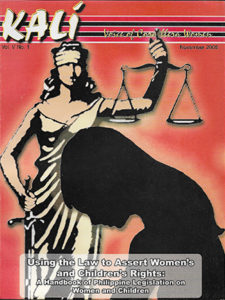 Historically, women in the Philippines held high status in society. We were Babaylans and katalonans (priestesses) then, who were very much revered and involved in the political, economic and social spheres of life. We were also central in the affairs of the clan, in production and decision-making. If there were at all laws or codes to speak of during these times, we were definitely part of the process and the results.
However, this status changed over time as we were influenced and controlled by Islamic laws and the colonial laws of Spain, America and even Japan. The making of laws was irrefutably reflective of our social context and space. For one, the issues of divorce, mobility, and property ownership for women which were recognized during pre-colonial times were radically changed by the Spanish Law that ultimately controlled and placed women in a subordinate position. Basically patterned after the Roman law, we inherit up to this day these biases against women from the Spaniards.
But history has also proven that today’s laws on women have somehow advanced to reflect the real issues and needs of women. The respect for women’s rights was reflected in Kartilya ng Katipunan at the turn of the century. Women’s role in politics has been recognized which is partially attributable to the Philippine suffragette movement. Today’s laws on labor, rape, sexual harassment, sex trafficking, anti-violence against women and many other were results of painstaking advocacy of the Philippine women’s movement.
“A harvest of laws,” is how lawyer Evalyn Ursua, a staunch women’s rights lawyer, referred to laws enacted as a product of the country’s women’s movement. She further asserted that these laws were borne out of the struggles of the women’s movement.
While these laws can be appreciated as concrete gains of the women’s movement, we cannot rely solely on these gains for the defense of women’s rights. For laws are nothing without action. Laws are not always equal to the justice system. Laws become toothless when the powerful and the moneyed class can buy their way out of the many injustices and violence committed against women and children. Worse, laws can be instruments of the state to further degrade and oppress women and children.
Violence against women and children continue to rise despite the existence of these legislation. These laws can be deemed futile for as long as the feudal, patriarchal and bourgeois culture is still very much embedded in our system.
It is for these reasons that the Philippine women’s movement needs to continue its efforts in reclaiming a truly just society, not only through legislative reforms, but through challenging the different social institutions that perpetuate injustice. This can be done through awareness-raising, organizing of women, community consciousness-raising towards prevention of violations and respect and promotion of human rights and women’s rights.
by CWEARC | Jul 1, 2003
Foreword
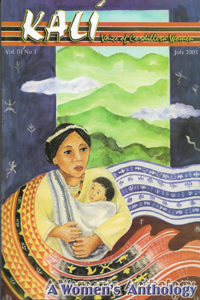 The Cordillera Women’s Education and Resource Center (CWERC) takes pride in announcing the birth of its first anthology of women’s literary and visual arts through its journal KALI. The time is ripe for the unfolding and sharing of women’s creativity and rich interpretation of the various facets of the people’s struggle in the region, and the country in general. The wellspring of people’s literature is the people’s struggle itself.
Through the years, the women’s movement in the Cordillera has not only continuously developed and honed women activists. It has likewise created a generation of chroniclers not only of the women’s struggle but of the people’s movement as well.
The actual involvement of writers and artists in the struggle for social change is the very material that is immortalized through literature, music and the visual arts. The victorious struggle against the Chico Dam development project was an inspiration to many and continues to motivate women writers and artists to draw parallelisms with contemporary struggles against development aggression. The pain and destruction wrought by imperialist incursion compounded by militarization is etched in the psyche of thousands of women in the Cordillera countryside but through poetry, music and sketches the collective experience is transformed into a sharper and resolute commitment to continue the anti-fascist and anti-imperialist struggle of the militant women’s movement.
A woman organizer is a cultural worker. She joins picketlines and barricades against capitalist exploitation in Lepanto Mines. She treks trails and mountainsides in Dalupirip, Itogon or the remotest sitio in Kalinga and Abra to understand the myriad issues and situations. To be able to motivate other women and the rest of the oppressed and exploited masses to get involved and act for their themselves entails a painstaking process of touching the consciousness and the spirit. Thus capturing through poetry, songs and colors the issues and problems that ail the people becomes an instrument in heightening awareness, arousing the reader or audience to take action.
The anthology showcases Cordillera-based women writers and artists. But a section has also been assigned to other writers and composers outside the region whose words embody the principles and aspirations of the militant women’s movement in the region.
This anthology is for all the people who tirelessly give the women’s movement the inspiration to pursue the struggle and the vision for a truly free and democratic society. And this shall not end here. The anthology of the people’s struggle is voluminous. This is but an initial contribution.
