by CWEARC | May 1, 2015
Foreword
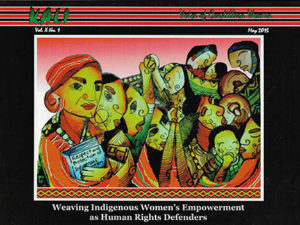
It’s not completely a new initiative. What makes this journey unique, however, is the utilization of positive aspects of customary institutions and values as avenues to promote indigenous women’s rights. It was a painstaking journey of human rights awareness and capacity building of indigenous women in 26 communities of Sagada and Bontoc, Mountain Province in the Cordillera region and in the municipalities of Alabel and Malapatan in Saranggani Province in Mindanao, from the last quarter of 2010 to 2013. It was an empowering experience for the participants who face human rights issues and violence against women due to conditions of militarization, development aggression, and poor delivery of social services. Development aggression in the form of corporate mining and energy projects is an issue of economic violence among indigenous women participants deprived of their access and control to land and natural resources. That empowering journey pushed them to speak and practice human rights as a collective, broke their silence about their own experience of sexual and domestic violence and mustered their confidence to access facilities and services that reduce their vulnerability to violence.
Their human rights awareness was not theirs alone. The indigenous women participants shared that awareness to their communities who became their support to access certain services and entitlements. The awareness was translated into having the skills to communicate human rights to fellow women within their organizations and communities, and to structures of leadership and decision-making.
There is now a deeper appreciation of having written documentation of their own experiences from the usual practice of oral tradition. The stories of the participants that they themselves have written are proof of how liberating the journey was. Their stories show were changes have occurred– in the mind-sets, attitudes or behavior, and in practice. These changes are difficult to measure. However, these powerful stories make the transformation more concrete.
This report also clarifies the role of customary institutions in protecting women from violence, and how women are respected traditionally. With the decline of power of indigenous socio-political institutions brought about by the dynamism in the wider society that indigenous peoples are very much integrated into, the protection or values that used to be accorded to women has eroded. It is vital to accord value on efforts made by organizations of indigenous women and communities in strengthening and promoting positive aspects of indigenous systems that provide protection for women against violence and danger.
Where there is a growing conflict between human rights and business, a larger gap between human rights holders and duty-bearers is created. Nothing would sustain the empowerment of women but their continued interest and collective actions to be liberated as productive members of their communities and the wider society.
by CWEARC | Jun 1, 2014
Years before, the winds in Sagada gave off the sound of rustling pine needles, the wings and songs of birds, and the fresh smell of the forest. Hardly did anyone think that soon enough, the wind would bring with itself the metallic sound of the spinning turbines of a wind farm.
Hardly anyone thought that it would bring the sound of heavy machinery drilling and digging, the sound of the earth being savaged in the name of progress, the sound of trees falling, and the stench of chemicals spilling. Hardly anyone, except for PhilCarbon president Ruth Yu-Owen and her supporters. PhilCarbon and the SagadaBesao Windmill Corporation drew up plans to build windmills on a windy ridge in the boundary of Sagada and Besao in Mountain Province. The proposed wind farm would have up to 15 wind turbines along the PilaoLangsayan Ridge. Each turbine would produce 600 kilowatts, totalling 15 megawatts of electricity. Mountain Province consumes only five to six megawatts. One of the selling points is to sell the excess nine to ten megawatts produced by the wind farm to electricity grids in other places in Luzon.
One process that any development project undertakes is an Environment Impact Assessment by the Department of Environment and Natural Resources. In addition, the Indigenous Peoples Rights Act (IPRA) provides that projects like the wind farm should include an assessment of how it will affect the indigenous people and natural resources in those areas. However, projects aiming towards so-called development have hardly ever taken into account the rights, livelihood, and culture of indigenous communities.
The windmill turbines were designed to be 80 feet tall, with rotor blades of 40 meters long. These turbines will be built near sources of water that will be inevitably and negatively affected by construction activities. The rotor blades will destroy the surrounding trees. The target project area also serves as a pastureland therefore will disturb the livestocks. Equally, the project will disrupt the routes of migratory birds. Imagine the mountains.
Imagine the pine trees. Imagine the monstrous metal turbines, starkly white and lifeless against the backdrop of the forest green.
PhilCarbon and its proponents promised that the affected municipalities would divide between themselves a royalty of one centavo for every kilowatt the wind farm produces. A fraction of a centavo per kilowatt, in exchange for the destruction of the land and its resources, and for the disruption of the natural course of living things that reside in the area. Obviously, the generosity of PhilCarbon knows no bounds—except for the bounds of profit.
Meanwhile, in Sabangan, the Chico River was despoiled by the construction of Hedcor’s facilities. Chico River has been the site of development and military aggression for years—it calls to mind the martyrdom of Macli-ing Dulag, who was murdered in his own home for the sake of “progress”. Hedcor is building a “mini” hydro power plant in Barangays Napua and Namatec. Testimonies from affected communities say that efforts of Hedcor to prevent damage to the river have been ineffective. They also speak about the deceptive moves of Hedcor. Instead of a mini hydro power plant that produces only 14 megawatts, Hedcor is actually building a power plant that would produces a total of 55 megawatts—far from the 14 megawatts they first claimed to build.
There are numerous renewable energy plant applications in Mountain Province alone. BIMAKA is planning on building a series of six mini hydro projects along the Balas-iyan river in Besao. All in all, there are 11 hydro-electric projects outlined in Mountain Province. The MainitSadanga geothermal project of the PRCMagma Energy Resources Corp., which is a partnership with Chevron expected to generate 80MW will be affecting a wide span of land in Bontoc and Sadanga of Mountain Province. Leaders of indigenous women’s organizations in Mountain Province say that energy projects are needed for other investments in the province especially mining and tourism.
Imagine a map of Mountain Province littered with markers for mining and renewable energy applications.
With destructive mining and renewable energy applications come militarization, harassment, and various other human rights violations. In Sagada, when the Free Prior and Informed Consent (FPIC) assembly held for the indigenous communities affected by PhilCarbon’s windpower project was conducted, the 54th IB under Colonel Martinez also had their operations. In Tocucan, indigenous leaders that opposed the mini hydro power plant project were harassed by members of the CAFGU1, a paramilitary group.
PhilCarbon also disseminated misleading information regarding the schedule and nature of the FPIC assemblies. Personnel of the National Commission on Indigenous Peoples (NCIP) who are mandated to uphold the rights of indigenous peoples, were party to PhilCarbon’s deception and manipulation of the FPIC process.
Despite all this, the affected communities especially the women, took action to uphold their rights and to protect the natural environment of their homeland. A 100-meter tall anemometer tower that tests wind speeds was built by PhilCarbon in preparation for the wind farm project in Sagada. On June 5, 2013, the structure that costs Php 1.5 million was felled by anonymous members of the protesting communities.
All over the communities affected by energy projects, the women actively participated in study meetings on issues regarding these projects, and made sure to attend every assembly called by the NCIP in order to voice their opposition to the destructive projects. In Tocucan, the women conducted a petition signing against the hydro project, and attended consultations in order to personally voice out their protests. The necessity to act and prevent the corporate energy projects is a demonstration of how women value life and the source of life which is the land. For them, it is upholding the dignity of women and peoples to respect and uphold life of present and future generations. Young women leaders say that violence against women is addressed in their
empowering participation to these struggles. The leadership they develop earn the respect of their communities. It raises their profile as women.
Now, imagine the struggle of the communities affected by the megadam project along Chico River during the Marcos dictatorship. Imagine the women—mothers, grandmothers, sisters and daughters—who confronted troops of soldiers during that struggle. Peoples of the Cordillera have shown, time and again, that we will stand together in order to protect our land, life, and resources.
by CWEARC | May 1, 2014
BAGUIO CITY – In celebration of the International Women’s Day, women from all over the region gathered in this city for a summit to amplify their position against profit-driven energy projects that has destroyed and are threatening their land, food and rights.
The testimonies of women from provinces affected by the said projects on March 8, 2014 speak of an old story that says:
“Maibus iti kuwarta, ngem saan iti daga; Ti bunga iti daga awan ti patinggana ay ay; Kakailian kitaen yo, saan tayo a paloko; Umanay a pagsarmingan, nakalkaldaang kapadasan ay ay… Iti biag mi ket simple, pagan-anu mi ti kuryente nu awan ti masilawan, a makan ti lamisaan, ay ay” (Money runs out but not the land; The fruit of the land is endless; Let’s not be fooled; Ill experiences are enough to reflect on… Our life is simple. Electricity is useless if there is no food to be illuminated on the table).
This is a stanza taken from a Salidummay song entitled, Pagsarmingan (Reflection) which was composed by the Salidummay cultural group during the height of the San Roque Dam struggle to share the experience of the Benguet people when Ambuklao Dam was set up. It is a song to tell the people affected by the San Roque Dam to learn from the ill experiences of their sisters and brothers who were displaced and lost livelihoods because of the Ambuklao Dam.
Ambuklao’s bitter past
“Ay wen met piman, ta ti kuryente nga us-usaren tayo tatta ket maggapu Ambuklao. Ngem ay ay pay ti kuryente no awan met ti panganan,” (Yes, the
electricity we are using today comes from Ambuklao dam but electricity is useless if we live in hunger) Mary-ann Bugtong of Bokod said in tears during her testimony in the summit. She recalled the stories of their parents when the Ambuklao dam started to be built. The area that is now dammed she said was the rice granary of the people not only of Bokod but also to Itogon, and Atok. Their parents were about to harvest the golden grains of the rice when the company along with their military guards came and drowned their rice paddies.
Bugtong cannot control her emotion when she continued recounting that their brothers and sisters in Bokod were displaced. Some went to other places but came back to Bokod due to the absence of a sustainable livelihood. If only she wished Ambuklao dam was never built, then they are still tilling their rice paddies. But she can only reminisce what their ancestral land looked like before in available photos.
“Wen, peace loving kayman ti taga Bokod isunga intulok da ti Ambuklao dam ngem nu ipilit da manen dayta geothermal ken dayta minas, agpatingga dayta nga ugali. Nu kasapulan nga aglabus, apay kuma a saan tapno laeng malapdan,” (Yes, the people of Bokod are peace loving that’s why Ambuklao dam was built. But if they will insist to put up the geothermal power project and even large scale mining, that attitude will end. We will do all forms of protest even getting ourselves naked just to stop their entry) Bugtong stressed.
The lesson from the Chico River
Who could ever forget the life and death struggle of the Kalinga and Bontoc peoples against the setting up of mega dams along the Chico River in the 1970s? This project was successfully stopped when the people forged strong unity and waged war against the government and its instruments. To them, Land is life therefore it must be defended. In both battles, accounts of the communities and even in news stories reflect that women fought side by side with men.
Today, it is the same song that Cordillera women were chanting during the summit. They said, a great battle must be waged by women along with their communities against the many corporate energy projects in the region to defend the land that is giving them life; a land that they have nurtured with their sweat and blood and a land where their main source of livelihood comes from.
Their major rivers and its tributaries the women said are outlined for hydro electric projects from mini-hydro to mega dams despite the existence of eight large dams. US company, Chevron is exploring the region for geothermal energy specifically in Kalinga, Mt. Province, Benguet, Abra and Ifugao. And one wind power facility is being pushed in Sagada, Mt. Province. Allowing these projects theysaid will weaken the women in their task to provide food on the table. Providing food they stressed needs to be attached with their land, their water and their forest. Allowing these corporations to take over will lead to hunger for the communities and profit for the corporations.
These kinds of projects are pushed for the reason that the country is lacking energy. In the report by Ani Bongaoen of APIT TAKO, half of the country’s energy consumption comes from imported fossil fuels. On the other hand, Philippines has a great potential in both fossil and renewable energy. What the country however is doing according to Bongaoen is selling these potentials to foreign corporations instead of developing it with the communities and for the communities. These corporate-initiated projects resulted to various human rights violations ranging from fraudulent free prior and informed consent (FPIC) process to militarization. This was evident with the testimonies of the women from Kalinga and Ifugao where Chevron’s geothermal power project; Quad River and Sta. Clara’s hydro power are located. The corporations according to the delegates have employed divide and rule tactics, bribery, and many others just to manipulate the result of the FPIC. In Kalinga, Chevron conducted several consultations and agreement signing in hotels in Tabuk City with selected “leaders”. Elders and leaders that they have chosen for such gatherings received per diems.
During consultations in the communities or in the hotels, companies according to the delegates are not disclosing enough information in order for the people to make a sound decision. All the information provided are one sided. Delegates affected by geothermal projects share the same story that the companies have promised them the moon and the stars. Words they added that were coming out from the mouths of corporations’ spokes persons were as sweet as sugar.
The women’s answer to these deceiving tactics echoed another phrase from the same Salidummay song that goes: “Ikari da’t init ken bulan, amin a kapintasan; Ngem nu dumanun to ti tiempo, agpatingga ti sao, ay ay!” (They can promise the sun and the moon, all that are beautiful; but time comes that none will be fulfilled). They are firm that they will never be fooled.
Women from different communities fought these projects in their own ways. In Ifugao, they have submitted petitions to concerned agencies. In Kalinga, women barricaded the entry of Chevron in one of the temperature test activities; women of Tulgao, Tinglayan strongly made their point through cultural protest during the consultation. In Benguet, government legislative bodies are bombarded with resolutions and petitions against hydro power projects and geothermal project. In Mt. Province, the wind power project stopped its exploration due to strong protests.
The Summit forged strong solidarity among women and advocates to be able to face the challenges of trying to stop these projects from community level up to the higher avenues of battle. The women formulated a position paper which they will be using in their activities at the regional down to community level. The women then went out of UP Baguio and marched the street to Session Road down to peoples’ park where they bravely displayed and aired their resistance to aforementioned projects. They even called for the ouster of PNoy because they said, he is not only playing deaf on their issues but he is even selling their energy resources to foreign companies. The Summit was made possible through the efforts of Cordillera Women’s Education Action Research Center (CWEARC) in partnership with Innabuyog Gabriela – the regional alliance of indigenous women’s organizations in the region, Alyansa dagiti Pesante iti Taeng Kordilyera (APIT TAKO), University of the Philippines-Kasarian and All UP Academic and Employees Union.
by CWEARC | Oct 1, 2013
Executive Summary
 The study is aimed at strengthening the affirmative actions of local indigenous women leaders and their organizations. This is done through a framework where the local indigenous women leaders are involved in the entire process of the research. It is a process where the researcher is working “with” the community rather than working “for” the community. It is a process which empowers both the participants and the researcher. It is a research process that has a bias in favor of the poor, oppressed, and struggling women.
The study presents the important role of indigenous women in Western Uma in the municipality of Lubuagan in Kalinga Province. The Cordillera Women’s Education Action Research Center (CWEARC) saw the importance of documenting actions of women of Western Uma as a concrete process of indigenous women’s empowerment. This is also in the context that leadership of women in community struggles is not adequately acknowledged and projected in current documents.
The study reveals how indigenous women led community resistance against a geothermal project since the 1970s. The project is now being pushed by Chevron. It uncovers the Uma women’s tireless efforts to urge their village mates and tribe mates on the adverse effects and impacts of the corporate geothermal project particularly on their access and control of their ancestral territory, livelihood, environment, human rights and cultural integrity. The community mobilization on 18 May 2012 where women were in the front line as negotiators is an acclaimed event in Uma’s history of struggle, stopping Chevron in its insistence to conduct its temperature testing. Since then, Chevron never showed up in the village. This does not however say that Chevron abandoned its project. Indigenous women were involved in the formulation of community petitions and urged concerned government agencies especially to the National Commission on Indigenous Peoples (NCIP) to take responsible action.
“The people, water, land, forest and the trees are connected. Where will we live? Where will we find refuge from heat? Where will we get our food if you are grabbing our home?” These words of Beatrice Belen, a woman leader in Western Uma captures the Uma tribe’s view of land as life.
Testimonies of indigenous women and community leaders in the village reveal the corrupt, divisive and manipulative practices of Chevron in order to obtain consent of indigenous communities. Accounts of women and community leaders divulge of ill manners of the NCIP, acting more as a broker for Chevron than protecting the rights of indigenous peoples.
The indigenous women of Western Uma continue to hurdle the still prevailing feudal-patriarchal culture along with the challenge of not being publicly acknowledged as active agents in community struggles and development.
The study shows the strong connection of indigenous women to land and life, putting themselves in active defense mode when land and life is threatened. The study confirms that it is honor for indigenous women and dignity for the tribe to defend land, life, and resources. The active participation of women in the Uma tribe’s struggles, then and now, is enabling community leaders and members to agree that indeed struggles and community development will not be complete when women who are more or less half of the population are left out, not acknowledged of their productive and leadership contributions and are denied of opportunities to be empowered.
The study findings will be used by Innabuyog Uma, the local indigenous women and the indigenous women’s movement in the Cordillera led by Innabuyog, in strengthening the work for women’s rights advocacy. In particular, the study findings serve as evidence in advocating, lobbying and networking that would galvanize indigenous women’s voices and actions in asserting access and control over their ancestral land and resources.
by CWEARC | Jun 30, 2012
Empowered are the indigenous peasant women of Sitio Liglig, Tanglag in Lubuagan, Kalinga who have defined and asserted their role in their community’s development through a socio-economic project despite the reality where there is low regard to women in their tribal community.
Sitio Liglig is a tribal community where men are recognize as the ones working for the betterment of the village. It was even a taboo for this community that a woman participates in community decision making and discussions during meetings. Just like most of the tribal communities in the Cordillera, women are just observers during the said community meetings. Their voices are sent via their husbands or male elders in their families. Their active role however in the resistance against the Chico dams in the 1970s to the 1980s significantly changed the community and tribal mindset on women, giving due recognition and acknowledgement to women’s role and participation in production, development and struggles.
Therefore, their persistent effort for the successful management of a rice mill in the community was a breakthrough for the recognition of their capacity in manning a socioeconomic project. This project was also very significant for the community’s recognition that women are men’s partners in community and nation building.
The success of the project was because of the desire of Liglig Women to end their suffering from the backbreaking job of pounding rice which they attributed as one of the reasons of some of their illnesses. It had been a long time suffering not only for women but also to the children who are assuming the task. After their long hours in the field under the scorching heat of the sun, they still have to endure an hour or two just to have food for dinner. This task had been hindering them for having enough time to rest or socialize in the community. They had a rice mill before but it had depreciated and there was no fund to replace it with a new unit.
In 1992, through the service of the Cordillera Women’s Education Action Research Center Inc. (CWEARC), the said women are trained of skills related to project management like auditing, book keeping and others. Along with CWEARC, women asked for financial assistance from another development institution which is the Montañosa Relief and Rehabilitation Services (MRRS) now Cordillera Disaster Response and Development Services (CorDisRDS) which was granted. They then made use of their traditional practice of innabuyog (working together) to facilitate the success of the project.
Their success in setting up the rice mill led to their incorporation into the wider community organization which is the Tanglag Community Organization for Unity and Development (TACOUD) as the women’s committee and mainly in-charge of the rice mill’s management.
The rice mill cooperative
Presence of a rice mill had given so much relief on women and children. It has also eased the hardship of the people in the said community in pounding, strengthen community unity and able to support greater participation of TACOUD in political activities especially for the women. It had also addressed the problem in carrying their palay to the nearest rice mill in town enduring hours of walk through the rugged terrains.
To manage the mill better, women and other members of TACOUD set up a system by organizing a cooperative that has clear policies. CWEARC and MRRS assumed assistance in developing the system.
The full operation of the rice mill cooperative has not only benefited the members but the whole community itself. Like any livelihood projects, the rice mill coop does not only speak of benefits, but it also speaks of responsibilities for the beneficiaries and the communities it is serving. They are given the task to maintain the stability of the equipment and the cooperative. They all have to work together for the progress of the project. Every member has to sacrifice time and effort to safeguard this livelihood project and ensure that the policies are being enforced.
On the other hand, lessons were drawn from the management of the old rice mill. The lessons include installing mechanisms to avoid petty corruption, unpaid credits and finance opportunism and come up with a strict monitoring system. It is also part of the cooperative’s policy to ensure that the benefit of the community always overrule self interests of few individuals. In this way, the cooperative will prosper.
In 2007, scarcity of rice was experienced in Liglig and neighbouring communities. As a response, MRRS offered a rice loan. They distributed 25 cavans of rice in Sukiap and Liglig and every household was able to get one can. It was agreed that the loan will be paid to the cooperative. Seeing the need for a rice cooperative especially during lean months, TACOUD decided to incorporate rice cooperative in their livelihood project. Thus, when the rice loans were all paid, they used it as seed money for the said endeavor.
Moreover, the rice collected from the payment of the rice mill is also added to the rice cooperative. The community’s rice supply then was continuously growing making it sufficient for the rice needs of the community.
Another service offered by the cooperative is buying rice from the community. The cooperative purchases a ganta (2.5 kgs) of milled rice for P70.00 (US$1.7) and sells it at P80.00 (US$1.92)/ganta. It has provided a venue for the community to sell rice in times of emergency. With the generated profit, the members are able to borrow from the cooperative in times of emergencies like medication, tuition fee of children, and the cooperative is able to support the fare of their participants for seminars and organizational development activities held in the town center.
Policies of the rice mill operation
In order for the community to be involved in the operation, they formed several clusters which are rotating every month. These clusters are Dallug, Ambato, Kupyaw, Gawaan, and Bannong-Gaang. Each cluster has a leader, treasurer, purchaser, maintenance and operators that composed of women and men. These people have particular tasks that help ensure the continuity of operation.
The milling schedule is on Tuesdays, Thursdays and Saturdays. Payment is either in cash or in kind (rice). Each can (the size of the 17 kilograms of cooking oil) is charged P20.00 (US$0.48) or one chupa (large size sardine can) of milled rice. Credit was one of the most significant lessons from the old rice mill that TACOUD believed to have caused its failure. It is then very important part of their new rice mill to enforce a “no credit policy”. Consideration is however given for dire situations where a minimum credit of 5 chupas or the milling for 5 cans of unhusked rice, is allowed. Deduction of 5 chupas everytime the debtor comes for milling is done until he/she has paid all the credit. The cooperative also made guidelines in terms of the mill’s operation. These guidelines included ensuring that the machine is in good condition before starting the engine; ensure that the engine has enough gasoline before turning it on and avoid emptying the tank before refilling it; ensuring cleanliness; immediate replacement of damaged spare parts; and only the maintenance group will be the ones in charge of the repair during the occurrence of machine dysfunction to avoid chaos. The bottom line is the cluster officers shall ensure the smooth flow of the rice mill’s operation and management.
Moreover, there is an annual assessment on the how the cooperative operated and it is in this assessment that the members identify the strong and weak points. In cases of failure, they draw lessons from it in order to avoid its occurrence in the future. Further, the coop policy states that the members should grasp and follow the right principle of criticism and self criticism.
They have to avoid envy, unhealthy competitions between clusters and other attitudes that can break the cooperative and the unity of the people itself.
Meanwhile, part of the member benefits is being entitled to have a free rice mill once a year. For monitoring purposes, they have a record of all the members indicating who has already availed and those who did not.
Responsibilities of the rice mill cooperative committee
The rice mill cooperative committee is composed of eight people (committee head, treasurer and six cluster heads). This committee is the one in charge in managing the rice mill. They ensure that the orientation and policies of the mill are enforced. Moreover, they are the ones facilitating cluster assessments and serving as role models in the implementation of policies. Also, they are facilitating the overall audit and assessment every after six months. Further, this committee reports to the members of the cooperative annually every general assembly of TACOUD.
The rice mill is owned by the community as stressed earlier and the fund shall be used not for self interests but for the interests of the people. Collected funds shall be used for community activities. On the other hand, if there are seminars held outside the village, representative/s can use the fund to attend and re-echo the seminar to the members.
All the expenses and income shall be recorded properly and the overall treasurer is in charge of the task.
“1/4 policy”
The cooperative has designed “1/4 policy” where in from the income, ¼ (25%) is allotted for maintenance, another ¼ shall be deposited to the bank for depreciation purposes, ¼ is segregated for political activities and the remaining ¼ of the income is allotted for contingency purposes. The depreciation fund shall be strictly enforced so that when the rice mill engine depreciates, there is a sure fund to buy new one.
“Mutual Aid fund”
Being a cooperative, the organization has designed a scheme called “Mutual Aid fund” where in part of the rice mill income shall be separated for credit purposes. The 1/3 of the allotted fund for political activities is used for this purpose. In cases of emergency, a member can borrow a maximum amount of P500 (US$12.00) from the said fund without interest. However, they have a responsibility to pay their debt after one to three months in order for it to be used by other members.
Some recommended improvements from the members
After one round of cluster assessments, there are several recommendations brought out. One is to further develop the rice mill like building a concrete water container to accommodate more water, create a better placement of the rice husks and buy a hose to ease the hard work of fetching water for the mill’s water container.
by CWEARC | Jun 1, 2012
Rice mill and cooperative is the most requested project in the remote areas in the Cordillera region where rice is the primary crop. This is because shortage is often experienced given the situation that rice farms are limited to about 0.2 hectares per family in the Cordillera interiors. Most of the communities produce rice once a year thus, it is only able to produce the rice needs of the family from 2-4 months.
There is rice shortage but at the same time there is a need for a rice mill. Farmers’ organizations, especially women see the rice mill as a tool to unburden them from the backbreaking labor of pounding rice. This is particularly true among Kalinga women who by culture are the ones in charge of the work.
There had been a lot of rice mill projects assisted by service non-government organizations belonging to the consortium of the Center for Development Programs in the Cordillera region (CDPC) where the Cordillera Women’s Education Action Research Center Inc (CWEARC) is included. Some of the rice mill and cooperatives prospered which is primarily attributed to the unity and perseverance of women and peoples’ organizations who led these projects. Some of these projects however failed.
Learning the hard way from a rice cooperative
Earlier in 1996, a rice cooperative was run by the local women’s organization in Mabaca with financial assistance from Cordillera Women’s Education Resource Center (CWERC). The chapter of Innabuyog-Kalinga Apayao facilitated the partnership. Nine cavans of rice then was provided as the initial revolving capital which families of the women’s organization borrowed in times of critical rice supply. Rice borrowed is returned usually during harvest time with a small interest to increase the volume of rice being revolved among members who are in dire need of rice.
The failure however of the rice cooperative as shared by the women’s organization is attributed to the low management capacity of and skills in managing a socioeconomic project. In the short course of practice, the rice cooperative was privatized by some officers, transparency was not developed and collective management was not facilitated.
The organization also acknowledged that there were no committees created to oversee the cooperative’s operation. There were no systems enforced to ensure that the cooperative is operating smoothly. The rice loans turned out as dole-out because there was no clear policy of payment and collection of payments. Moreover, loans were not well recorded, use of loan payments was not accounted and an audit was never conducted.
These explain an outstanding point in their assessment that the rice cooperative did not deliver its function of contributing to advance a community livelihood project.
Members of the women’s organizations lamented strained relationship within the organization due to how the project turned out. They have truly learned the hard way. Although disheartened, they have been looking forward to revive the cooperative. Given the chance, they said, they already know the needs in order to manage a project well.
Bringing their lessons to greater heights
Having been granted the second chance, their next project turned out to be one of the success stories in the socio-economic work in the region. The project is a micro-hydro which powered a rice mill of the rice cooperative, energized all houses of 36 households and powered a community blacksmith of sitio Bayowong, Barangay Mabaca of the Municipality of Balbalan in Kalinga province. It started with the desire of the Mabaca Farmers’ Alluyon (MFA) to relieve the women in the community from the hard work of pounding rice.
On April 2001, the project took off with the assistance from Montañosa Research and Development Center (MRDC) and other partner non government organizations (NGO) in the region. The operation of the rice mill cum rice cooperative and community blacksmith began in 2003.
Mabaca Farmers’ Alluyon
All the farmers, including women in the village are members of this organization. This was formed because of the farmers’ desire to work together in order to be able to bring development in their community. They are one in the belief that unity will enable them to survive the difficulties that severe poverty brings. They then sought the support of NGOs for the aforementioned socio-economic project and it was granted by MRDC and other partner institutions.
According to their narration during the socio-economic workshop on March this year, working for the project did not end when it was granted. It was only the beginning of hard work and struggle for the members of MFA to solve the encountered problems in putting the rice mill up. It was an achievement in progress. The process itself was a learning journey for them starting from the planning until rice cooperative’s full operation.
Project cost
The all over cost of the project is P1.2 million (US$28,571.50) including the counterpart of the peoples’ organization (PO). Half of the cost is loan and the other half is grant. Also part of MFA’s counterpart to the project is the manual hauling of purchased materials, widening and clearing of irrigation canal, producing locally hand sawed lumber and voluntary labor until its full operation.
A learning process
As a farmers’ organization that is not adept in the management and operation of such livelihood project, it was a journey of learning. First was setting up of the micro-hydro project as a source of energy for the rice mill, lighting of houses and eventually set up a blacksmith that is also powered by the hydro.
Before the project started, the members of MFA went to a learning trip in barangay Ngibat in the municipality of Tinglayan, also in Kalinga province. It is in this barangay where an existing rice mill cooperative which is providing them electricity used for light and in the blacksmith is located. This is an example of a successful socio-economic project which continues to operate as of press time. Further, this micro hydro project is one of the pioneering success stories of MRDC in developing appropriate technology among indigenous peasant communities in the Cordillera. When electricity from the Kalinga Electric Cooperative (KAELCO) finally reached the said community, most of the people decided not to connect with it. Their reason was, the electricity produced by the rice mill is enough for their energy needs.
MFA learned a lot from Ngibat Rice Mill Cooperative. Participants of the learning trip told that the success story of Ngibat gave them strength to continue the same project in their own community. MRDC and other partner NGOs helped MFA with the basic skills in operating the micro-hydro project, the rice mill and cooperative and the community blacksmith. During the earlier months in operating the technology, the officers and the whole of MFA were guided by MRDC in instilling the right orientation in managing the technology and the use of the technology in galvanizing community unity.
By 2003, all houses consisting of 36 households enjoyed lighting until 10 o’clock at night. This allowed children to study their lessons and enabled folks to do their weaving of baskets, mats and other handicrafts in the night. Light is opened at 4o’clock in the morning allowing the peasants to do the home chores and preparation for their school-going children while they equally prepare their needs for their farm work. When there is a community occasion, the energy supply is available for overnight.
The rice mill began its operation in 2003. The rice mill charges P7.00 (US$0.16) per can (the size of a 17- kilogram cooking oil) or 2 chupas (large size of a sardine can) of milled rice for every can of unmilled rice.
Like that of Tanglag, members of the MFA were taught on the principles of collective ownership thus avoiding the overruling of self – interest among members which will prevent the occurrence of petty corruption. The association then created guidelines of the rice mill cooperative. They formed committees with specific tasks. It was stressed in the guideline that there shall be no credit and a member should not be absent during his/her shift in manning the operation unless there is a valid reason.
Present status of the project
As of the moment, the project is smoothly moving forward. According to the MFA, they applied all the lessons they have learned during the earlier months of operation. The beneficiaries have also expanded. It is now serving not only the residents of Bayowong but also nearby villages who are buying palay in their community. Moreover, it is now generating electricity that they are using as a source of light and used in the blacksmith.
The project did not only relieve the women from pounding rice but it has benefited the whole community. According to them, there is already no need for them to buy farm tools in the town center because people in the community can already forge bolos, knives and other farm tools.
Challenges met
The leaders of the MFA said, the biggest problem they have encountered is the non cooperation of the other members of the community who did not believe that the project can prosper. The rice mill cooperative was told to be a project of the New Peoples Army (NPA) and local community members who were affected by that false tagging refused to be part in the beginning. The fear dominated among some community members.
However, the leaders and majority of the members of the farmer’s association were determined to pursue the project, asserting that it is theirs and it is for the benefit of their association and community. The state of government neglect where social services is nil in the area propped up MFA’s determination for this project. They put their best efforts in order for the project to push through until such time that the aforementioned section of the community who were not participating earlier were convinced that the rice mill is a good project and it can benefits all of them.
Manang Fely Gonayon, one of the staunch women leaders proudly acknowledges the improved management capacity of the farmers’ association which she also believes is a process of transforming attitudes and mindsets of women to work together, trust on their capacities and putting worth to or valuing their contributions.
Members of the MFA said that it is normal in a community to have some member not cooperative in the beginning but in the end, they will come in when they see that the peoples’ organization is united and have the strong will to make the project successful. It is also a test on the flexibility and patience of the association in managing community members being a community institution which is wielding unity of minds who are strongly influenced by an attitude of “to see is to believe”.
Recommendations
MFA believes that there is a need to widen the villages that the rice mill is serving. In order to attain this, its membership and leadership are convinced that there is a need for them to be informed and trained on issues relative to energy and electricity in order to maximize the project. The technical knowledge
and trainings will accompany the sustained leadership trainings among the farmers, women and the youth groups to be able to manage effectively and efficiently the project, defend the project from destruction most possibly from militarization and demand more of this kind of service primarily from government units and concerned agencies, and from the services of civil society organizations.
